

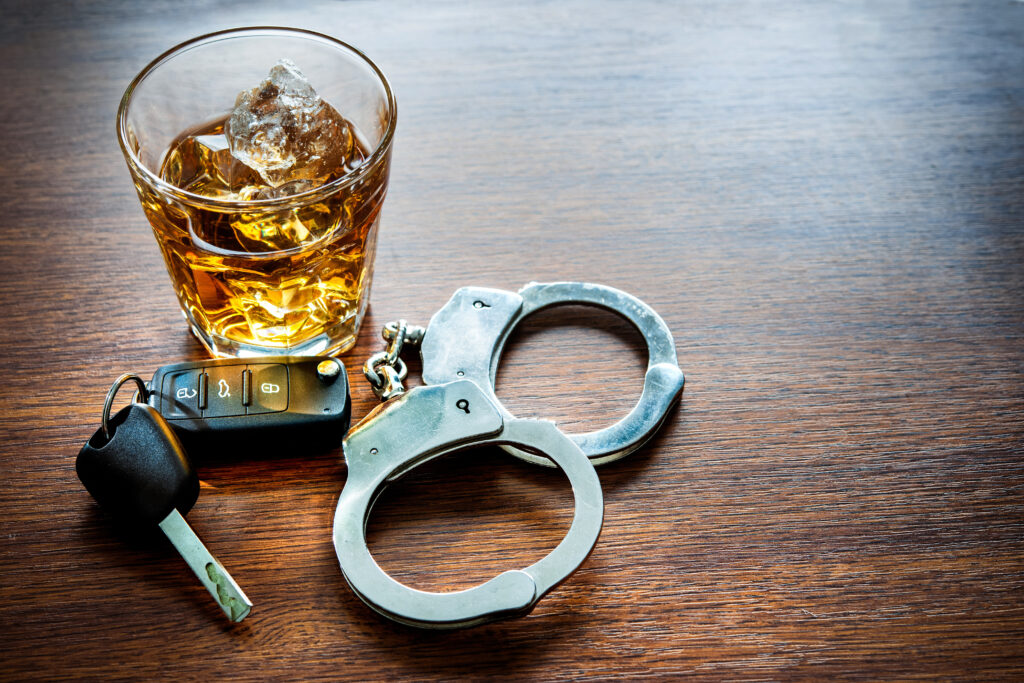
Getting arrested for public intoxication can be embarrassing and a little depressing. While the details of the arrest may be fuzzy, you need to know ‘What happens if you’re arrested for public intoxication in D.C.?’
In Washington, D.C., a public intoxication arrest is treated as a misdemeanor that carries penalties including fines and, sometimes (although rarely), jail time. The major concern is whether you pose a danger to yourself and other pedestrians in your situation. When you’re arrested, you’ll be processed like a regular prisoner.
With what’s at stake, a criminal defense attorney at Bruckheim & Patel can help avoid a criminal record by challenging probable cause or sobriety tests.
What Is the Law for Public Intoxication in Washington DC?
In Washington, D.C., public intoxication under D.C. Code § 25-1001 involves being visibly impaired by alcohol or a controlled substance in a public place or in a vehicle parked in a public place in accordance with open container laws.
The law defines “public place” broadly to include streets, alleys, parks, sidewalks, parking areas, vehicles in these locations, and even unlicensed premises where food or entertainment is sold for compensation. This ensures that the prohibition applies to common urban settings in D.C., where nightlife and public gatherings are frequent, but it does not extend to fully private indoor spaces unless endangerment occurs.
D.C.’s Intoxication Handling Program, outlined in D.C. Code § 24-604, provides a humane alternative by allowing intoxicated individuals to be taken to a detox center for medical evaluation and sobering, potentially avoiding criminal charges altogether if no endangerment is present.
What Happens During a Public Intoxication Arrest in DC?
When arrested for public intoxication, you’ll be taken into custody. You may be transferred to a detox facility or a hospital, after which you’ll be taken to the police station for processing. Depending on the circumstances of your arrest, you may be released with a citation for a court hearing or held for a longer period.
If there is a clear case of endangerment, the charges are escalated to criminal charges. Police officer evaluations often include observing signs like slurred speech, unsteady gait, or disruptive actions, without requiring chemical tests like breathalyzers, as the law focuses on visible endangerment rather than specific blood alcohol levels.
If detained, you may receive a violation notice, which is handled post-sobering, ensuring the process is streamlined for quick resolution in most scenarios.
What Are the Legal Consequences of a Public Intoxication Arrest in DC?
In Washington, DC, public intoxication is punishable by fines of up to $500 or 90 days in jail, classified as a misdemeanor. If your public intoxication puts you or another person at risk, that counts as a violation too. Besides immediate penalties, public intoxication charges result in other consequences, including a criminal record.
Penalties vary based on severity, with civil resolutions common for first-time, non-endangering incidents, involving low fines and referrals to alcohol treatment programs to promote rehabilitation over punishment. Misdemeanor convictions, however, carry stricter fines and potential short jail terms if proven endangerment exists.
Civil violations avoid criminal records, preserving future opportunities, while misdemeanor charges allow for sealing after two years unless innocence is proven for immediate expungement. Factors like prior offenses or combined crimes, such as resisting arrest, can lead to harsher sentences, emphasizing the importance of legal review early on.
How Does a Public Intoxication Arrest Affect Your Future in DC?
A public intoxication arrest in D.C. may result in a criminal record if convicted, affecting future employment, especially in jobs that require security clearance or where the employee is stern about alcohol problems.
For civil violations, there’s no lasting record, allowing you to maintain clear background checks for jobs or rentals without disclosure requirements. Misdemeanor arrests, however, may appear temporarily, affecting opportunities until the case is sealed.
Steps for record sealing include waiting two years for misdemeanors or filing immediately if acquitted. Use the D.C. Superior Court’s processes and resources, such as the Public Defender Service, for guidance on expungement motions. Links to dccourts.gov provide forms and eligibility checkers for streamlined applications.
How Long Does a Warrant for Public Intoxication Last in DC?
Warrants in DC (arrest and bench warrants) don’t expire. The warrant remains active indefinitely or until:
- The person named on the warrant is charged
- The time allowed for prosecuting the charge runs out because the person isn’t apprehended. Misdemeanors can be prosecuted for up to three years.
- A judge decides to recall the warrant.
It’s essential to note that even if the statute of limitations has expired, the warrant may still be active, and one can still be arrested. As such, it’s important to consult with Bruckheim & Patel DC DUI lawyers to understand the circumstances of the warrant against you and how to proceed.
Can You Fight a Public Intoxication Charge in DC?
Yes. Despite being a criminal offense, it’s your right to challenge the charges against you and defend your freedom. Your defense could be disputing the arresting officer’s probable cause or field sobriety tests, whether you put yourself and others in harm’s way, or that it happened in a public space.
Defenses focus on disputing intoxication evidence, such as arguing symptoms were due to fatigue or medical conditions rather than alcohol/drugs, or showing no chemical confirmation was sought. Lack of endangerment is crucial, as the law requires proof of hazard beyond mere presence.
Our criminal defense lawyers can negotiate with prosecutors for diversions, such as enrollment in detox programs or dismissals, leveraging short court timelines to file motions quickly and avoid criminal convictions. This is vital given D.C.’s emphasis on treatment over trials.
How Can You Avoid Public Intoxication Arrests in DC?
To avoid public intoxication arrests in D.C., limit alcoholic beverages in public areas, plan safe transport, and avoid disorderly conduct, as law enforcement officers target endangerment based on sobriety tests.
Avoiding public intoxication arrests hinges on responsible alcohol consumption and respectful conduct, particularly in public spaces.
Prevention starts with arranging safe transportation via Metro, Uber, or taxis before consuming alcohol, especially in high-enforcement areas where public consumption is strictly monitored. Limiting drinks in unlicensed public spots reduces the risk of citations.
D.C. enforces rules rigorously in nightlife hubs, so familiarize yourself with laws via MPD resources or apps that track safe drinking limits and local ordinances. This awareness helps avoid unintentional violations while promoting personal responsibility.
Work With Bruckheim & Patel Professional Criminal Defense Attorneys
Public intoxication is humiliating, and the laws can be confusing. To stand a better chance of getting cleared of charges, you should work with a professional criminal defense attorney. Bruckheim & Patel can explain your situation and the consequences that you’re facing.
Contact us for legal counsel and to create a custom defense to protect your rights.